

I wake up before the city, as I often do in Shanghai. The street sweepers are singing their monotonous tune as the sleepy cook makes my jianbing guozi, a Chinese crepe, just around the corner from my hotel.
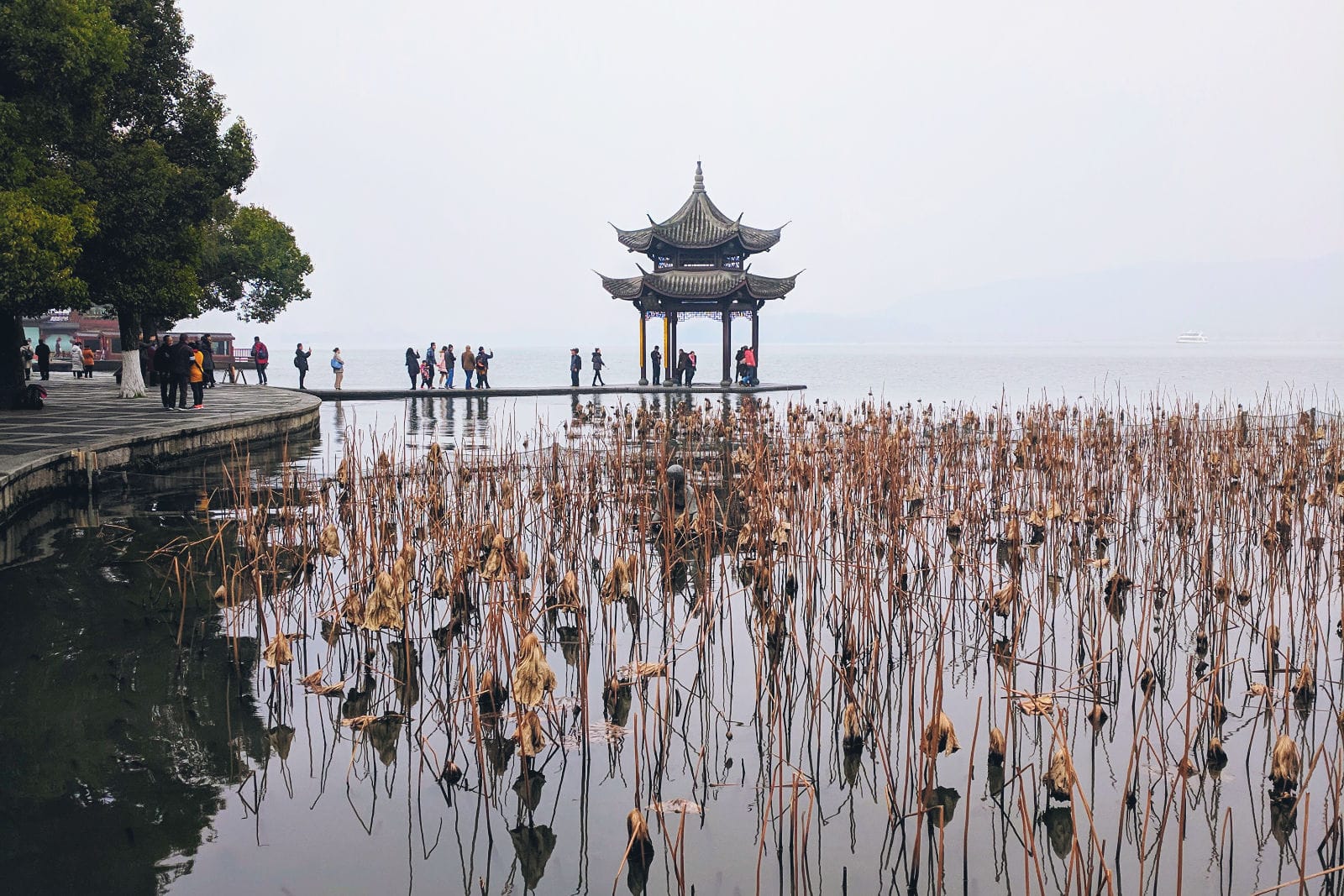
The taxi ride to Hongqiao Station is uneventful, as expected. I board the incredibly efficient high-speed train to Hangzhou East, book in hand. The metro from the train station to West Lake is easier to navigate than I expect, and I arrive at the mist-covered West Lake in Hangzhou in less than 90 minutes. This day trip from Shanghai is a breath of fresh air.
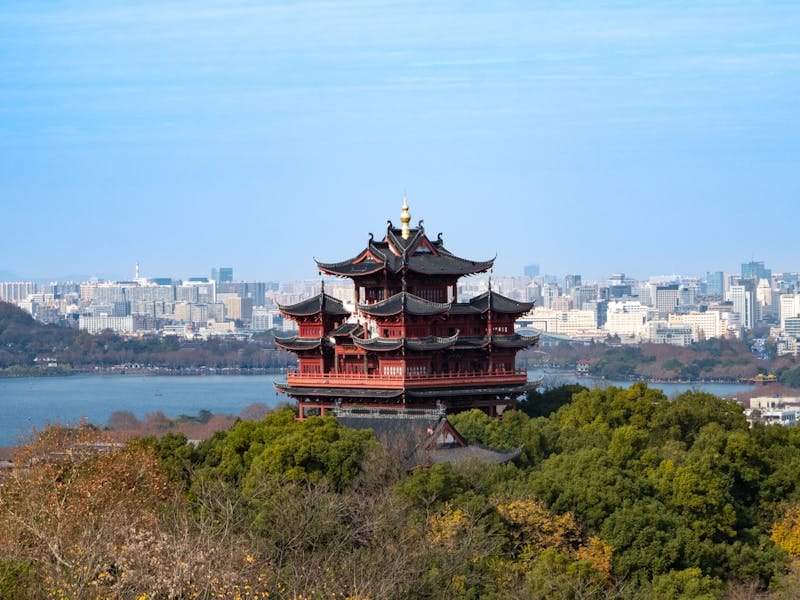
Hangzhou is a beautiful contrast to the neon megacities of China. Marco Polo famously described the city as one of the most beautiful in the world. There’s even a Chinese proverb about it, translated as “above, there is heaven; below, there is Suzhou and Hangzhou.” The West Lake (Mandarin: Xīhú), in particular, is an icon of Chinese culture: it’s inspired poets and painters throughout history with its breathtaking vistas.
A West Lake Hangzhou day trip is ideal for any traveller looking for a scenic getaway in southern China. Read on for the best ways to spend your time at West Lake.
While Hangzhou is a popular destination for Chinese tourists, it’s still fairly under-the-radar for foreigners. If you’ve never been, learning how to plan a trip to China can help you navigate the nuances of the mainland before you arrive.
Perimeter walk: circling West Lake
My goal for the day is simple: find peace away from the frantic, constant movement of Shanghai. Even though it’s Chinese New Year, a notoriously busy time to travel in China, I succeed.
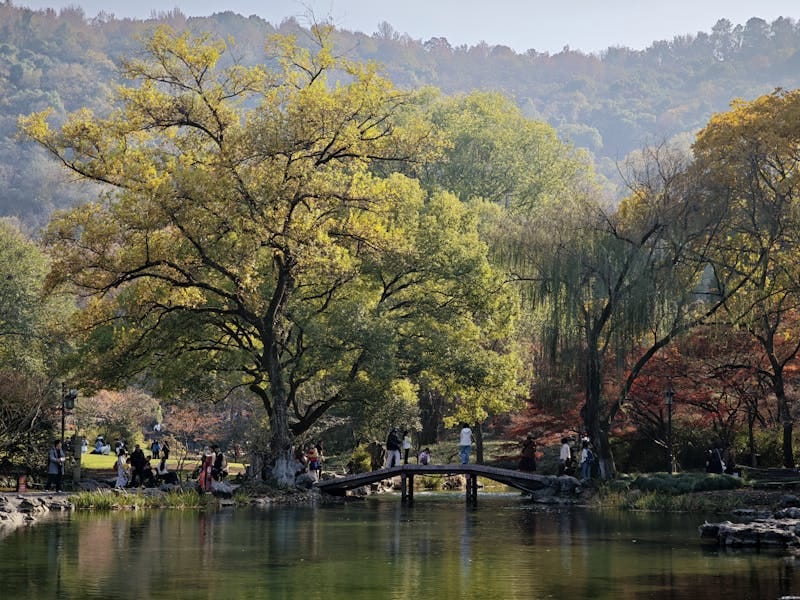
West Lake features four landscaped causeways, but the western side of the lake is less developed, making this a quieter section to explore.There are many visitors, but the lake’s serenity casts a calming presence on everyone. For February, the forest surrounding the Su Causeway is beautifully lush and green, which I’ve missed during my time in Shanghai.
Along the path, I find many pagodas perfect for the wedding parties visiting for a photoshoot. The bridges are something out of an ancient poem and I can’t help but feel the centuries of people before me who walked the same path. As the day moves on and the mist lifts from the lake, many people ride in the traditional turtle pond boats, hand rowed by their captain, the croak of the oars echoing against the water.
Even though more tourists filter in, by walking the entire perimeter of the lake, it’s easy to find a quiet corner, an empty stone path, and even a small cove without a single ripple. The Guoshan Causeway is even less crowded, as it’s often skipped by other tour groups.
Visit Lingyin Temple (Temple of the Soul’s Retreat)
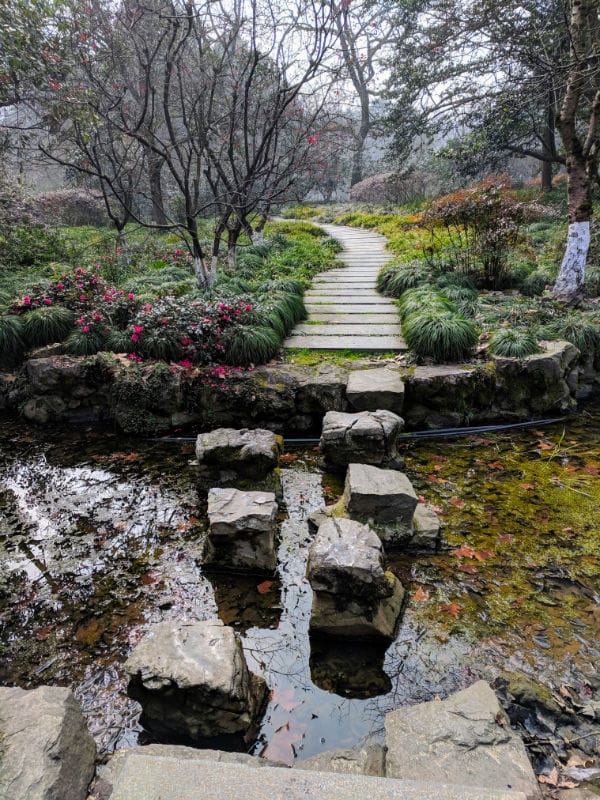
My plans for the day include strolling around the lake and visiting Lingyin Temple. The woody hills of the Feilai Feng area are even denser than the Causeways surrounding the lake.
I take my time exploring the intricate Buddhist grottoes carved into the limestone cliffs surrounding the temple as others breeze past me.
Although I don’t see any signs, finding the temple is as easy as following the smell of incense. Clouds of incense smoke cover the temple as I arrive.
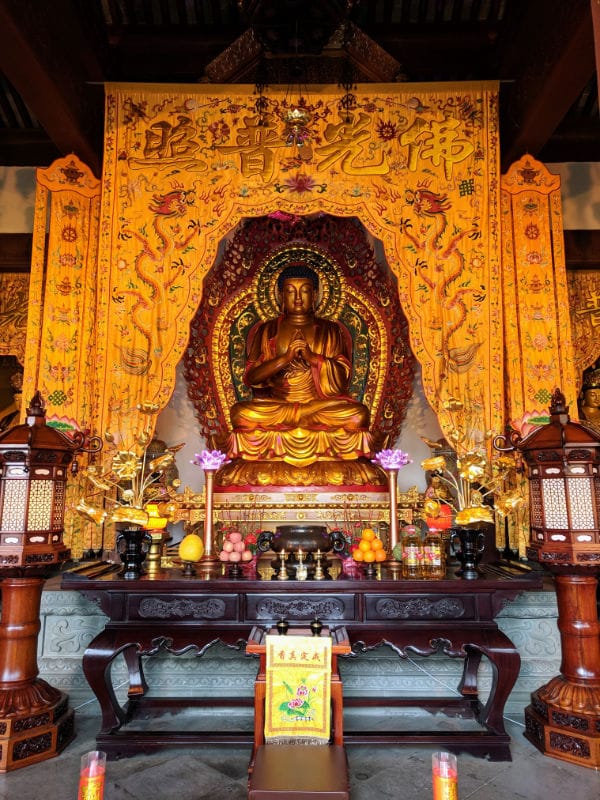
The temple feels ancient. Which makes all the statues and the intricacy of the art in the Grand Hall that much more impressive. Every square inch is beautifully decorated, with gold leaf covering much of the surfaces.
I find people praying in each building of the temple. Some offer coins for the temple’s upkeep, some offer fruit or flowers to the gods, and some are simply paying their respects.
Savour a mindful meal at Lingyin Vegetarian Restaurant
One of my favorite places to eat in China is at Buddhist temples. As a vegetarian, the temple grounds are a safe place to find a meal that’s reasonably priced.
There’s usually a very small selection to choose from, but it’s always delicious. Using simple, local ingredients, everything is made fresh. Following the “Wok Hei” method (breath of the wok), the chefs cook everything very hot to retain the nutrients and giving simple ingredients a smoky flavour, elevating the quality of every dish.
My meal today consists of mock duck, made from seitan drizzled with a dark, sweet sauce. The hand-pulled noodles are swimming in a steaming broth that warms my core in the cold February air. There are mushrooms and green bok choy leaves soaking in my soup, adding a lightness that perfectly balances the heavy noodles.
How to get to Hangzhou
Getting to Hangzhou is a simple: There are plenty of trains daily from Shanghai. Most high-speed trains take under an hour from Shanghai Hongqiao to Hangzhou East (Hangzhoudong); alternatively, trains to the more centrally located Hangzhou Station are only slightly slower (1.5 hours).
While I took a day trip, you could easily take it even slower and spend two or three days in Hangzhou. Late fall through spring will give you the most dramatic scenery, with the fog settling over West Lake. Hangzhou is also known as the home of Longjing tea, so arrive in spring for a fresh harvest. Alternatively, autumn will give you crisp air that feels so good to breathe after the smog of Shanghai.
GUEST AUTHOR: MOLLY CLAYTON
Molly spent her 20s travelling the world, mostly solo. She loves planning the trip almost as much as actually travelling. Now a small business owner and a mother, she loves the added challenge of traveling with her toddler and infant, and shows families that travel doesn’t stop when you have kids–it’s just a new beginning.
You can find her on social media, or follow along on her blog at HookedonHiatus.com.


Leave a Reply